
July 2011

Thank you. Now Have a Free Webinar.

//

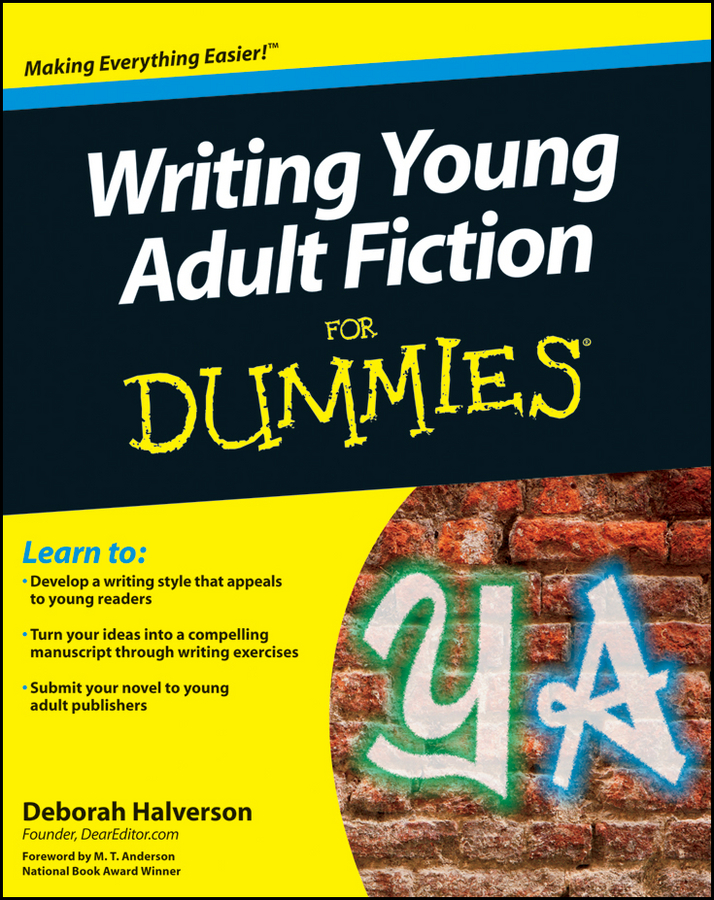
The Editor’s month-long party celebrating the publication of Writing Young Adult Fiction For Dummies may be ending with today’s final stop on her WYAFFD Blog Tour, but she’s got one last grand finale event for writers: her eye-popping, info-laden FREE webinar tomorrow with high-energy author/illustrator Katie Davis….
WYAFFD cover

Dear Readers…

I’m excited to team up with Katie Davis tomorrow, July 27, for “Translating Rejection Letter Lingo: What To Do about a ‘Flat’ Story.” I hope you’ll stop by to hear my tips for pumping up flat fiction and to take part in the listener Q-and-A. With Katie’s fab visuals, you’ll be as entertained as you are informed. [Register here.]

Phew! A week-long virtual book launch, an 8-stop blog tour, a free webinar, book and ‘free edit’ giveaways, and a dozen interviews, podcasts, and guest posts on others’ blogs. . . . It’s been a busy month, but I believe every new book deserves a party. I sure hope you’ve enjoyed mine.

Thank you, and happy writing!
The Editor

Which Comes First, the Agent or the Editor?

/

Dear Editor…

I’ve always been focused on writing queries to agents. Recently, I’ve heard a number of authors say it’s far better to sell your ms to a publisher yourself and then get an agent. Other authors say almost all publishers no longer accept unsolicited manuscripts. Is it better to approach an agent or a publisher?

Best regards,
L.

Dear L.…

Include both agents and publishers in your submission strategy, going heavy on the agents. Most agents accept submissions from everybody; it’d be unwise to turn your back on that fact. Submit to as many as are appropriate for your manuscript. Also attend conferences or events where editors are present. They often extend open submission invites to attendees, getting you past their “no unsolicited mss” policies. (Yes, most publishers have those.) If you land a publisher first, agents will be more likely to represent you because clearly your work is marketable. If an agent bites first, then you’ve got access to her speed dial—and you’ve got someone who can handle your contract and help you shape your career.

Happy writing!
The Editor

Finishing a Novel Despite Self-Doubt

Dear Editor…

I just started writing a story, but I want to know how I can be motivated to write a novel!? Make it long, and beautiful. Every time, I think, It’s never going to be good. Is there any way I can lose this feeling, and continue on writing it?

Sincerely,

Xena

Dear Xena…

Stop trying to motivate yourself to finish a novel and instead motivate yourself to finish your story. “Complete a novel” is a task to check off a list. Bleh. A story, though, that’s something you can get jazzed about. A story has characters you grow to care about, and problems that threaten them, and relationships that make them laugh, cry, mourn. You continue writing a story because you want to see how your fictional friends’ lives work out. Try writing with the aim of discovering just a little more about your characters each day. Eventually you’ll know what happens to them and can type “The End.” Story (and novel) accomplished.

Happy writing!

The Editor


Newsflash: Writing Young Adult Fiction For Dummies Blog Tour

Dear Readers…

If you enjoyed the exclusive daily articles featured in the WYAFFD Virtual Book Launch, drop in on the 8-stop Writing Young Adult Fiction For Dummies Blog Tour July 18-27. It’ll be a fun tour, with The Editor guest posting about craft and promotion, and with interviews, giveaways, and a grand finale FREE webinar with The Editor. For the tour schedule and links to tour stops, read on…

July 18 – July 27

WRITING YOUNG ADULT FICTION FOR DUMMIES

BLOG TOUR

July 18: Shrinking Violet Promotions
July 19: SCBWI blog
July 20: QueryTracker.net
July 21: Elizabeth O. Dulemba Blog
July 22: Cheryl Rainfield Blog
July 25: Story Connection
July 26: The Got Story Countdown
July 27: FREE “Four Fixes for a Flat Story” webinar w/ The Editor & Katie Davis*

*Be sure to pre-register

Ways to Stop Copying Characters?

Dear Editor…

What do you suggest for younger writers with more limited experiential base when it comes to letting go of copying characters (i.e., Harry Potters, Wimpy Kid)?

Thanks,

K.

Dear K.…

Encourage the copying. In fact, tell Young Writer to pick three of his favorite characters. Then, get sneaky: Have the writer choose the strength of one of those characters, the flaw of another, and a physical feature or two of the third, and then list those items. He’s now looking at an amalgam of three characters—and thus a copy of none. Now have the child write down what Mr. Amalgam wants more than anything in the world, making him a full character complete with a goal to strive for, a flaw that hinders his efforts, a strength to help him overcome that flaw, and a look that’s all his own. Voila! A unique protagonist with shades of the writer’s favorite heroes, making the child more eager than ever to write his story.

Happy writing!

The Editor

Bildungsroman v. Coming-of-Age Novels

/

Dear Editor…

It seems that a number of fairytales and fantasy stories are bildungsroman—the protagonist either grows to adulthood, or is an older teenager (Harry Potter, Lord of the Rings, the Princess Bride, etc.). Would these stories be considered for adults or children?

Sincerely,

Lucy

Dear Lucy…

Young people certainly have their coming-of-age novels, but the narrators of those books don’t present the stories as if they’re investigating why and how the heroes became the adults they are, which is a quality of bildungsroman novels (think David Copperfield). Young adult novels have a more in-the-now feel, with the main characters’ maturation usually taking place within a short time frame, such as a single year of school. Rarely do they cover a full childhood or young adulthood as Dickens does in his classic. Novels featuring longer maturation windows can still be for kids if their narratives have a youthful sensibility. That sensibility is arguably the biggest marker of a young adult book. Adults are already self-aware and consider why they and others behave as they do (even if they don’t always exercise that mature perspective!); adult novels with this mature sensibility are not “young adult books” even when they feature young heroes. In contrast, young people are just starting to shed their self-centric perspectives and tend to judge and act without first considering how their actions will affect others. The heroes of their novels may reach a higher level of self-awareness by the end of their novels, but they don’t start out that way and their narratives reflect that. So, when you’re considering whether a story is “for” adults or children, weigh its narrative sensibility.

Happy writing!

The Editor

Writing YA Fiction For Dummies Virtual Book Launch – Thank You!

Dear Readers…

I hope you don’t mind one more WYAFFD launch-related post, because I simply must say THANK YOU.  The kind wishes and enthusiasm sent my way this week has been nothing short of amazing. So many of you shared news of the launch through your blogs, social media, and email. I am supremely grateful for such active support.

What a party this launch has been—right down to the fireworks that lit up the nation’s skies halfway through the launch. (How’s that for timing?)

But now that the party’s over, I must admit that I am toast. A 7-day virtual book launch really takes the starch out of a gal. So I’m giving myself the rest of the week off—and you all a breather from the daily DearEditor.com updates. I’ll meet you back here on Tuesday, bright-eyed and bushy-tailed, to resume our lively Q-and-A about writing and to show you the awesome Guest Editor posts I’ve got waiting in the wings. But before I go, two orders of business: one more thank you and a congratulations.

First, I’d like to publicly thank, one more time, those who went above-and-beyond to make this week extra fun for all by featuring interviews, podcasts, guest posts, and giveaways in support of the launch:

Second, I’d like to congratulate Mark McClintock, the winner of the Day 7 “Free Full Manuscript Edit” giveaway. Mark, I’ll send you an email directly with all the details.

Okay, all, if you’ve got any questions about the craft or business of writing lurking in your brain pan, now’s the time to send them in using the “Write to The Editor” button on the top menu because I’m itchin’ to dig back in. See you Tuesday!

The Editor